
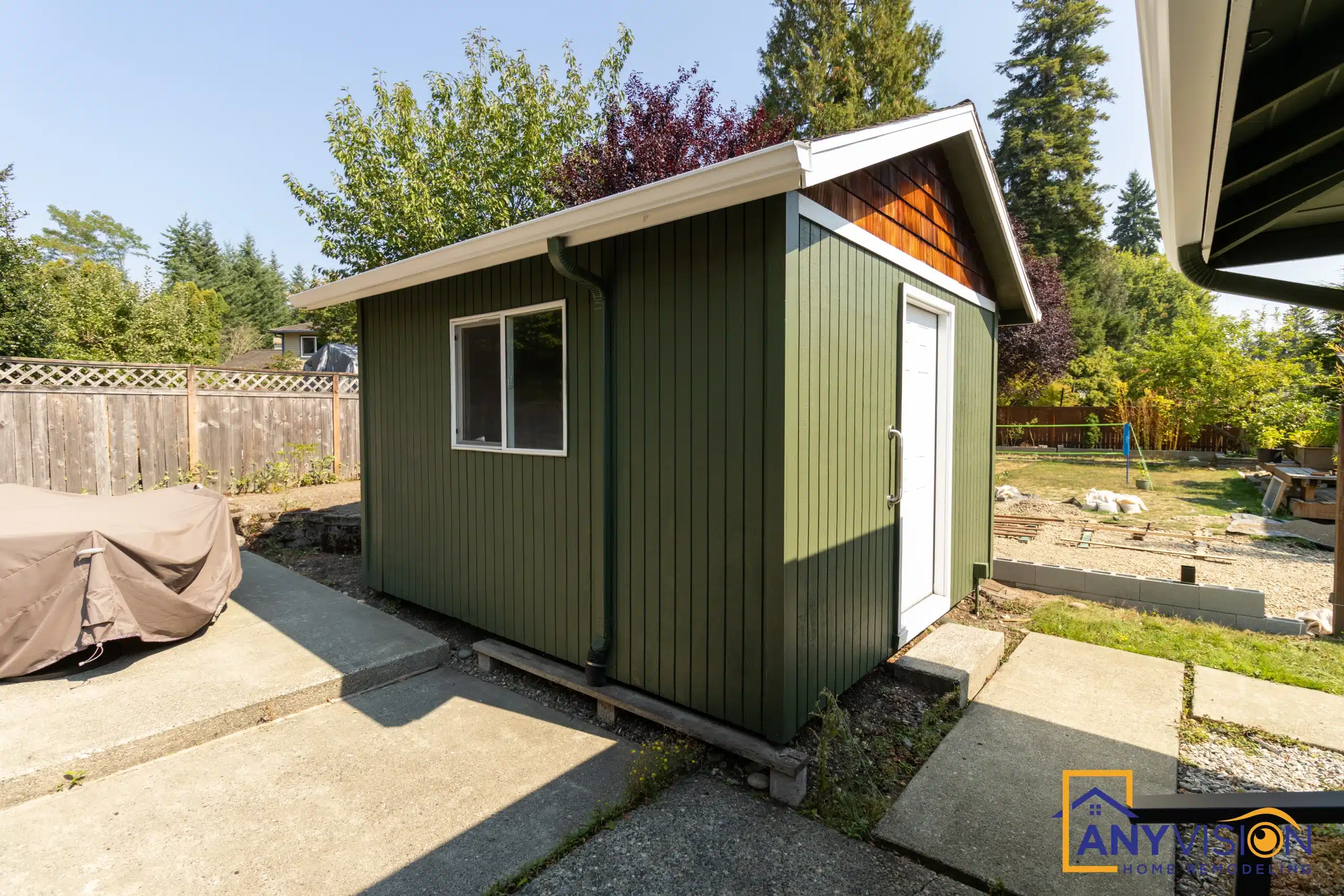
Washington ADU Laws Explained — What HB 1337 Means for Eastside Homeowners
HB 1337 Rewrote the Floor for ADU Rights Across Washington State
HB 1337 is a 2023 Washington state law that eliminated the most restrictive ADU rules cities had previously enforced statewide.
Before it passed, a homeowner in Redmond, Bellevue, or Seattle could easily hit a wall when exploring an ADU project. Cities had authority to require owner-occupancy, mandate off-street parking, and cap unit sizes below what the lot could physically support. HB 1337 — the Washington state accessory dwelling unit law — pre-empted those local restrictions. It set a statewide floor that no city can go below.
If you looked into building an ADU before 2023 and got turned away, your lot may qualify now. This guide explains exactly what changed.
Why the Old Rules Mattered More in Redmond and Seattle Than Anywhere Else
Eastside homeowners had more to gain from HB 1337 than almost anywhere in Washington.
The pre-HB 1337 landscape on the Eastside was unusually restrictive. Redmond, Bellevue, and Seattle all enforced ADU codes that operated independently of each other — and often produced conflicting requirements across jurisdictions.
The owner-occupancy requirement was the biggest obstacle. It meant a homeowner couldn’t build a DADU — a detached ADU, meaning a separate structure on the property — and rent it without living on the same lot themselves. For investors and homeowners who had already relocated, that requirement made ADU construction a non-starter.
Here’s what most homeowners don’t realize about Eastside ADU history: many of the restriction layers were added by local cities responding to neighborhood opposition, not state housing policy. HB 1337 overrode that.
Anyvision’s office sits in Redmond near the SR-520 corridor. That geography matters. A significant share of residential lots in this area fall within the HB 1337 transit proximity threshold — a specific distance from major transit stops that triggers a parking exemption. Understanding which lots qualify is something we confirm on every ADU project before the 3D site layout is drawn.
If you looked into building an ADU before 2023 and got turned away, your lot may qualify now under rules that did not exist when you last checked.
What HB 1337 Actually Changed — Rule by Rule
This section covers each changed rule plainly: what existed before, what the law replaced it with, and what it means for your lot.
Owner-Occupancy: Removed Statewide
Before HB 1337, many Washington cities required the property owner to live on-site to build or rent an ADU. That was the rule in Redmond. That requirement is gone.
Owner-occupancy removal means you no longer need to be a resident of the property to build and rent an accessory dwelling unit under current Washington state law. A property owner can build a DADU, rent it, and live elsewhere.
This is the single biggest change HB 1337 made. It opens ADU construction to a much larger group of lot owners than could access it before 2023.
DADU Size Limits: State Floor Now Set at 1,000-1,200 Square Feet
The DADU size limit — the maximum square footage for a detached ADU — was previously set by each city individually. Cities could cap units at whatever size they chose.
HB 1337 sets a statewide floor: detached ADUs can be up to 1,000 square feet. On larger lots, depending on applicable local rules, that limit may extend to 1,200 square feet. Cities retain the authority to allow larger units. They can no longer require smaller ones.
The practical implication: if your city previously capped a DADU at 800 square feet, that restriction is pre-empted. You can now build to the state floor without a variance.
Off-Street Parking: Exemption Near Transit
Before HB 1337, most Washington cities required at least one off-street parking space when an ADU was built. On small lots or tight parcels, that requirement could eliminate a project entirely.
HB 1337 created a transit proximity parking exemption. Under this rule, off-street parking is not required for ADUs located within a half mile of a major transit stop.
A significant portion of the Eastside — including neighborhoods near the SR-520 corridor and Sound Transit’s Eastside light rail stops — falls within this threshold. Confirming whether a specific parcel qualifies requires a site-level check, not a general assumption.
Pre-Emption of Local Restrictions: What Cities Can and Cannot Still Do
Pre-emption of local ADU restrictions — when state law overrides a city ordinance — is the legal mechanism behind all three changes above. HB 1337 means Washington cities can’t enforce ADU restrictions stricter than the state minimum. But they still control design standards and utility connections.
This distinction matters. Cities retained the authority to set:
- Architectural and exterior design standards
- Utility connection requirements and impact fees
- Building setback rules within the bounds of state law
- Height limits that don’t reduce usable floor area below state minimums
The state set the floor. Local rules still govern the finish work, the connections, and the site-specific design requirements.
Where Local Rules Still Apply: Redmond, Seattle, and Bellevue Are Not the Same
HB 1337 pre-empted restrictive size and occupancy rules — but each city still has its own permit pathway and design standards.
Redmond
Redmond’s ADU rules now operate within the HB 1337 framework. The Redmond Residential Zoning Code — the RZC — still governs setbacks, lot coverage, utility connections, and the permit application process for ADU projects within Redmond’s residential zones. A DADU permit in Redmond runs through the City of Redmond’s permit center, not the state.
Anyvision’s office is in Redmond. On Redmond ADU projects, we confirm the specific RZC requirements that apply to the parcel before any design work begins.
Seattle
Seattle operates its own permit pathway through SDCI — the Seattle Department of Construction and Inspections. SDCI is the agency responsible for issuing building permits and enforcing zoning rules in the City of Seattle. SDCI has its own ADU application process, plan review queue, and design standards that function within the HB 1337 framework.
Seattle lots present unique variables: tight parcels, existing structure proximity, and utility connection fees that can vary significantly by neighborhood. The SR-520 corridor lots and Sound Transit adjacencies create parking exemption eligibility on a large share of the SDCI service area — but each address needs to be confirmed individually.
Bellevue
Bellevue has its own design standards, particularly in areas like West Bellevue and BelRed, where lot configurations and neighborhood design review requirements add complexity to the ADU permit process. Bellevue’s rules operate within HB 1337 but apply design standards that differ from both Redmond and Seattle.
Treating these three jurisdictions as the same regulatory environment will produce errors in project scope. The permit pathway, design requirements, and timeline for each differ.
What I’ve Seen on Eastside ADU Projects Since HB 1337 Passed
The change most homeowners don’t know about yet is the parking exemption — it’s determining which lots are viable.
I’m Chase Briga, founder of Anyvision. Before HB 1337, I had initial conversations with homeowners whose lots were genuinely not viable for a DADU — not because the land wasn’t there, but because the parking requirement consumed the buildable footprint.
Since 2023, I’ve seen that conversation shift. A homeowner near a Sound Transit stop would have needed to carve parking into a lot that couldn’t support it. Now they don’t. The unit fits.
The owner-occupancy removal has also opened up a category of projects we simply didn’t see before. Property owners who had relocated — or who purchased with the intent to rent — weren’t calling us. Now they are.
What I tell every homeowner before we start the 3D site layout is this: HB 1337 set the floor, but your lot has a specific address. Redmond RZC setbacks, SDCI application timelines, Bellevue design review — those are still real variables. We confirm what applies to the specific parcel before we draw anything. That conversation happens before design, not after.
When to Bring in a Licensed Contractor for Your ADU Project
The right time to involve a contractor is before the 3D design is drawn — not after you’ve already filed a permit.
Here’s why that timing matters. HB 1337 expanded what’s legally possible on most Eastside lots. But the gap between what the state allows and what your specific parcel can support is determined by local permit rules — setbacks, lot coverage, utility connection points.
If a design is drawn without confirming those local variables first, it may require revision after the permit application is submitted. That revision costs time and often money.
A licensed contractor with direct experience in Redmond RZC and SDCI permit pathways — and with the 3D design tools to model site layout before filing — can confirm buildable envelope, size, and placement before a single drawing is produced.
Confirming what your lot supports under current law is the first step. Everything else follows from there.
Anyvision holds Washington state contractor license #ANYVIHR768KB and operates under RZC, SDCI, and Bellevue permit pathways on active ADU projects.
ADU Projects Across the Eastside and Seattle
Anyvision serves Redmond, Seattle, Bellevue, Kirkland, Sammamish, and the surrounding Eastside market.
Our office is in Redmond at 8709 161st Ave NE. We manage ADU permit applications through Redmond’s permit center, SDCI in Seattle, and Bellevue’s building department. Each project starts with a parcel-level confirmation of what current law and local rules allow before design begins.
Confirm What’s Buildable on Your Lot Before You Design
The most useful first step is a site-specific confirmation — not a general reading of the law.
HB 1337 changed the statewide floor. Your specific lot’s buildable envelope is determined by local permit rules applied to your address. Anyvision confirms that before the 3D site layout is drawn — so the design reflects what can actually be built and permitted, not what the state allows in the abstract.
If you’re exploring an ADU project in Redmond, Seattle, Bellevue, Kirkland, or Sammamish, start with our [ADU Construction page](/services/adu-construction/) for a full breakdown of DADU, AADU, and garage conversion options. Or call 425-515-5796 to start a scoping conversation about your specific parcel.
Find Out What’s Buildable on Your Lot
We map the buildable envelope on your specific parcel — setbacks, lot coverage, transit proximity — before any design work begins.